

If you own a home in Harris County, your annual appraisal notice deserves a close look every single year. A property tax protest Harris County homeowners file each spring is one of the more direct ways to make sure your home is not valued higher than it should be, and understanding how the local process works makes it far less intimidating.
This guide connects the general Texas protest process to what Harris County homeowners specifically need to know, from your first notice through a possible formal hearing.
Why Harris County Homeowners Should Review Their Appraisal Notice Carefully
Harris County is one of the largest and fastest changing real estate markets in Texas, covering a huge range of neighborhoods, home types, and price points. That scale means appraisal values can shift quickly and unevenly from one part of the county to another, sometimes even between neighborhoods that sit close together.
Because of this variation, a notice that looks accurate at first glance may not hold up once you compare it to what has actually happened on your specific street or in your specific subdivision. Reviewing your notice each year, rather than assuming it mirrors last year’s number or a general countywide trend, is one of the most useful habits a Harris County homeowner can build.
With so many properties to appraise each year, mass appraisal methods used across the county can sometimes miss details specific to your home, whether that is a condition issue, an inaccurate square footage figure, or a comparison to homes that are not truly similar to yours. A careful review is often the only way to catch these kinds of discrepancies.
General Steps for a Property Tax Protest Harris County Homeowners Can Follow
The overall process in Harris County follows the same basic structure used across Texas, administered locally by the Harris Central Appraisal District.
Review Your Notice
Start by checking your owner information, exemptions, market value, appraised value, and last year’s value for accuracy. Confirm the protest deadline printed on your specific notice rather than relying on a general date from a previous year.
File Your Protest
Homeowners generally file a protest directly with the Harris Central Appraisal District, either through an online system or by mail, depending on current procedures. Because portal names and filing methods can be updated from year to year, confirming the current process directly with the appraisal district is the safest approach.
Whichever method you use, keeping a copy of your filed protest and any confirmation you receive is a simple habit that can save confusion later if questions come up about whether or when your protest was submitted.
Attend Your Review
Once filed, your case typically moves toward an informal review and, if needed, a formal hearing, which we cover in more detail below.
Informal and Formal Review Concepts
Most Harris County protests move through one or both of two stages.
Informal Review
This is usually the first opportunity to discuss your case, often with an appraiser from the district, sometimes through an online settlement process rather than an in-person meeting. Many cases resolve at this stage without moving further.
Formal ARB Hearing
If the informal review does not resolve the disagreement, the case moves to the Appraisal Review Board, a panel of local residents who review evidence from both sides and reach an independent decision. This stage is more structured than the informal review but is still designed to be accessible without legal representation.
Common Evidence Types
The evidence that tends to matter most in a Harris County protest is similar to what works across Texas generally.
Comparable sales of similar homes nearby remain one of the more persuasive types of evidence, particularly when they closely match your home in size, age, and condition. Unequal appraisal comparisons, which look at your appraised value per square foot relative to similar properties, can also be useful, especially in neighborhoods with limited recent sales activity.
Documentation of property condition issues, including clear photos and contractor repair estimates, rounds out the most common evidence homeowners bring to a Harris County hearing. Given the size and diversity of the county, gathering evidence that is genuinely specific to your neighborhood, rather than a general county average, tends to carry more weight than broader comparisons.
How Houston-Area Market Differences Can Matter
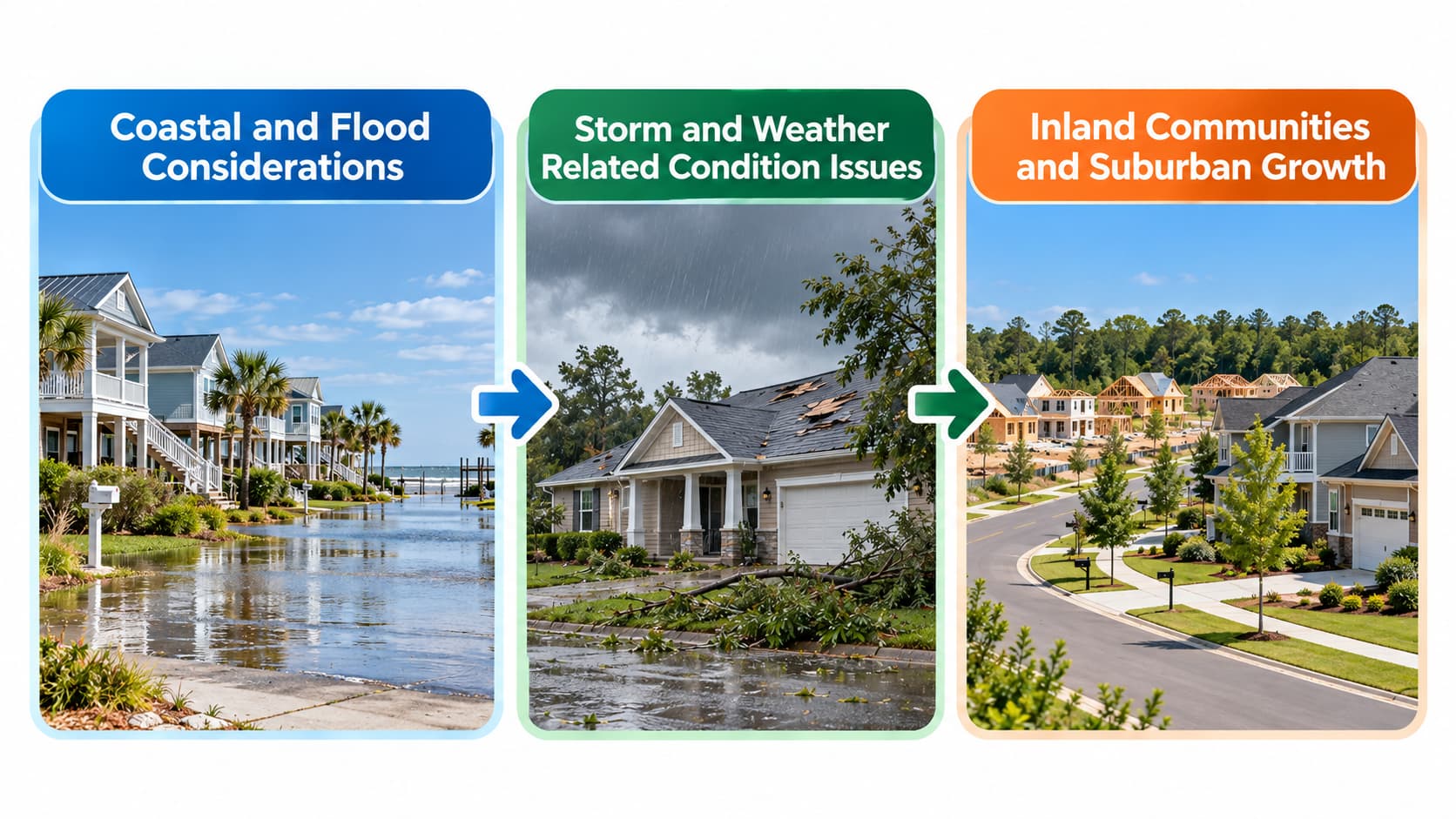
The Houston area is not one uniform market. Neighborhoods inside the city, suburban communities, and newer developments on the outer edges of the county can all move at different speeds depending on local demand, new construction, and school district boundaries.
This means a countywide headline about rising or falling values may not reflect what actually happened where you live. A subdivision with strong recent sales activity can see meaningful appraised value increases even in a year when other parts of the Houston area were flatter. Paying attention to your specific area, rather than assuming a general trend applies evenly across Harris County, helps you evaluate your notice more accurately.
This is particularly relevant for homeowners near the edges of rapidly developing areas, where new construction and shifting demand can cause values to move differently than in more established, slower changing neighborhoods just a few miles away.
Why Homeowners Should Confirm Local Procedures and Deadlines
Because Harris County is large and its procedures can be updated from year to year, this guide intentionally stays general on specific portal names, exact deadlines, and step by step filing instructions. The Harris Central Appraisal District is the authoritative source for current deadlines, required forms, and filing procedures that apply to your property.
Confirming these details directly, rather than relying on a general overview, helps make sure you do not miss a deadline or use outdated instructions.
How SaveOnHouseTaxes.com Helps Harris County Homeowners
Homeowners researching property tax protest companies Harris County residents can work with often want the same basic things: a clear process, responsive communication, and a fair chance at an accurate value.
SaveOnHouseTaxes.com works with homeowners throughout the Houston area, reviewing appraisal notices, gathering evidence such as comparable sales and condition documentation, and representing homeowners through the informal review and, if needed, a formal ARB hearing. Because SaveOnHouseTaxes.com operates on a contingency basis, homeowners only pay if the protest results in tax savings, so there is no upfront cost to have your notice reviewed.
Whether you are comparing tax protest companies in Harris County for the first time or have worked with a service before, understanding the general process helps you evaluate any option, including handling it yourself, with more confidence.
Final Thoughts
A property tax protest Harris County homeowners file each year is a normal part of owning a home in one of Texas’s largest and most dynamic markets. Understanding the general steps, from reviewing your notice through a possible informal review or formal hearing, along with the kind of evidence that tends to matter most, puts you in a stronger position no matter which path you choose.
Because Harris County’s specific procedures and deadlines can shift from year to year, confirming the details directly with the Harris Central Appraisal District remains an important final step before you file.
FAQ
Q. Who administers property tax protests in Harris County?
The Harris Central Appraisal District administers appraisals and protests for properties located in Harris County.
Q. What is the difference between an informal review and a formal ARB hearing in Harris County?
An informal review is typically a conversation with an appraiser, sometimes handled through an online settlement process. A formal ARB hearing is a more structured proceeding in front of an independent panel if the informal review does not resolve the case.
Q. Does a countywide market trend apply evenly across Harris County?
Not necessarily. Different neighborhoods and areas within the Houston region can see different value changes in the same year, so local, neighborhood-specific data matters more than countywide headlines.
Q. What evidence works best for a Harris County property tax protest?
Comparable sales, unequal appraisal comparisons, and documented condition issues, such as photos and repair estimates, tend to be the most useful evidence types.
Q. Where can I confirm the current Harris County protest deadline?
The deadline printed on your specific Notice of Appraised Value, along with the Harris Central Appraisal District’s official site, are the most reliable sources for current deadlines.
Q. Does SaveOnHouseTaxes.com charge anything upfront to review my Harris County property?
No. SaveOnHouseTaxes.com operates on a contingency basis, so homeowners only pay if the protest results in tax savings.