

Galveston County covers everything from beachfront property on the island to established inland communities like League City and Friendswood, and that range means appraisal notices can vary quite a bit depending on where your home sits. Property tax protest services approach these different areas differently, which is worth understanding before you decide how to evaluate your own notice.
This guide walks through the coastal and neighborhood factors that can affect your value, the general protest process, and what kind of evidence tends to matter most for Galveston County homeowners.
Why Coastal and Neighborhood Factors Can Affect Values
Galveston County is not a single uniform market. Homes near the coast face considerations that inland homes simply do not, while inland communities have their own set of factors driving value.
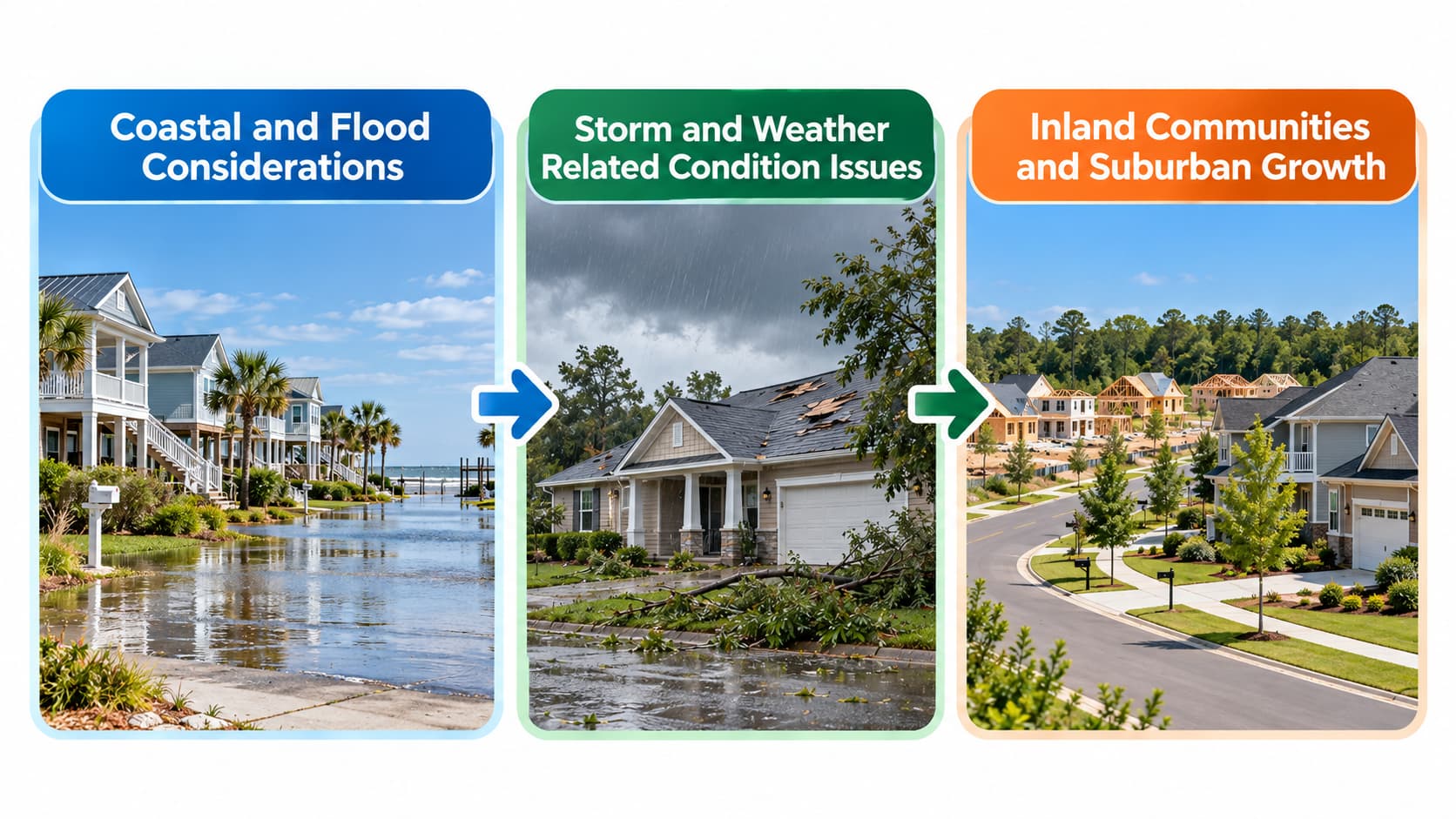
Coastal and Flood Considerations
Homes closer to the coast can be affected by flood zone designations, elevation requirements, and exposure to wind and storm risk. These factors can influence both a home’s market value and, at times, its insurability, which buyers often factor into what they are willing to pay. If your property has specific flood or elevation characteristics, that information can be relevant to how your value is evaluated.
Storm and Weather Related Condition Issues
Coastal and near coastal homes can also carry condition considerations tied to weather exposure over time, including roof wear, moisture related issues, or damage that may not be immediately obvious from the street. These are worth documenting the same way any other condition issue would be.
Inland Communities and Suburban Growth
Areas like League City, Friendswood, and other inland Galveston County communities have seen steady suburban growth, with appraised values influenced more by typical market forces such as nearby sales and new construction than by coastal exposure. Treating these areas the same way you would treat coastal property can lead to missing what is actually driving your specific number.
General Protest Steps
The overall protest process in Galveston County follows the same general structure used across Texas, administered locally through the county’s appraisal district.
Homeowners typically begin by reviewing their notice and confirming the deadline printed on it. The general rule across Texas is May 15, or 30 days after the notice was mailed, whichever is later, though the specific date on your notice always controls. From there, a protest is filed with the appraisal district, followed by an informal review and, if the disagreement is not resolved, a formal hearing before the Appraisal Review Board.
Because specific forms, portal names, and procedures can change from year to year, confirming the current process directly with your appraisal district before filing is always worth the extra few minutes.
Evidence That May Help, Including Condition or Repair Issues
Good evidence is what tends to separate a protest that goes somewhere from one that does not, and Galveston County homeowners have a few extra categories worth considering.
Photos of any condition issues, paired with contractor repair estimates, remain useful regardless of location. For coastal or near coastal homes, this can include documentation of weather related wear, needed roof repairs, or other maintenance items that a buyer would factor into an offer. Clear, dated photos tend to carry more weight than general descriptions.
If your property has flood zone documentation, elevation certificates, or other records relevant to its specific coastal characteristics, keeping these organized can be useful context, particularly if they affect how the property compares to others being used in a valuation.
The Role of Comparable Sales
Comparable sales remain one of the more persuasive types of evidence in Galveston County, but selecting the right comparisons matters more here than in a more uniform market.
A coastal property should generally be compared to other coastal properties with similar proximity to the water, elevation, and condition, rather than to inland homes that do not share those characteristics. Similarly, an inland home in League City or Friendswood should be compared to similar inland properties rather than coastal ones. Mixing these categories can produce a comparison that looks reasonable at first glance but does not actually reflect your property’s true market position.
Recency also matters. A sale from several years ago may not reflect current conditions, particularly in areas where insurance costs or storm related factors have shifted buyer behavior more recently
What Happens After Filing
Once a protest is filed, your case typically moves toward an informal review and, if needed, a formal hearing, similar to the process across the rest of Texas. If your case resolves informally, you may see a decision relatively quickly. If it proceeds to a formal ARB hearing, expect a more structured process with a scheduled time and a panel reviewing evidence from both sides.
Whatever the outcome, your resulting appraised value becomes the basis for your tax bill once local tax rates are set later in the year. Keeping a copy of your filed protest, evidence submitted, and final decision is a simple habit that makes future years easier to reference, particularly if similar coastal or condition related factors come up again.
Why Property-Specific Review Matters
Because Galveston County includes such a wide range of property types, from beachfront homes to inland suburban properties, a general county trend rarely applies evenly to every homeowner. Reviewing your specific notice against evidence that actually reflects your property’s characteristics and location gives you a far more accurate picture than assuming a broad market narrative applies to your situation.
This is true whether your value went up, stayed flat, or even went down. Each of those outcomes can be accurate or worth questioning depending on what has actually happened with comparable properties in your specific area.
Getting Help With Property Tax Protest Services
Reviewing coastal factors, selecting the right comparable sales, and organizing condition evidence takes time, particularly for homeowners balancing this against work and other responsibilities.
SaveOnHouseTaxes.com works with homeowners throughout the Houston area, including Galveston County, reviewing appraisal notices and pursuing lower values when the evidence supports it. Because SaveOnHouseTaxes.com operates on a contingency basis, homeowners only pay if the protest results in tax savings, so there is no upfront cost to have your notice reviewed.
A property tax protest service Texas coastal homeowners can rely on should understand these local nuances rather than applying a one size fits all approach, and tax protest consultants familiar with coastal considerations can help make sure nothing specific to your property gets overlooked.
Verify Local Procedures Before You File
Because Galveston County’s appraisal district procedures, forms, and portal names can be updated from year to year, this guide intentionally stays general rather than stating specific instructions. Your county appraisal district remains the most reliable source for current requirements that apply to your specific property.
Final Thoughts
Property tax protest services can help Galveston County homeowners navigate a county that spans coastal and inland markets alike, but the process starts with understanding what actually drives your specific property’s value. Reviewing coastal or condition factors where relevant, selecting truly comparable sales, and confirming current procedures with your appraisal district all put you in a stronger position, whether you handle your protest yourself or bring in help.
Whatever your property type, giving your notice a careful, property-specific review each year remains one of the more reliable ways to make sure your value reflects reality.
FAQ
Q. Do coastal and inland homes in Galveston County get valued the same way?
Not exactly. Coastal homes can be affected by flood zone designations, elevation, and storm exposure, while inland communities are typically driven more by standard market factors like nearby sales and new construction.
Q. What is the deadline to protest in Galveston County?
In most years the deadline is May 15 or 30 days after your notice was mailed, whichever is later. Always confirm the exact date printed on your specific notice.
Q. What evidence helps most for a coastal property protest?
Documented condition or weather related issues, along with comparable sales from similarly situated coastal properties, tend to be the most relevant evidence.
Q. Should I compare my coastal home to inland sales?
Generally no. Coastal properties are best compared to other coastal properties with similar proximity to water, elevation, and condition, rather than to inland homes.
Q. What happens after I file a protest in Galveston County?
Your case typically moves toward an informal review and, if needed, a formal ARB hearing, following the same general process used across Texas.
Q. Does SaveOnHouseTaxes.com charge anything upfront?
No. SaveOnHouseTaxes.com operates on a contingency basis, so homeowners only pay if the protest results in tax savings.